
Drain Service & Repair Bexley
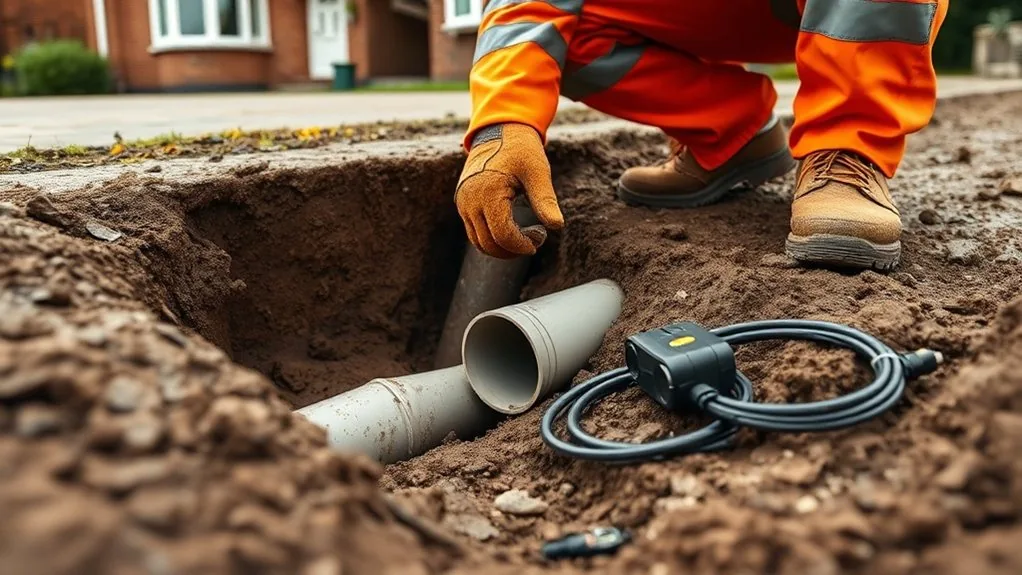
Dealing with cracked, collapsed or blocked drains in Bexley can be stressful and disruptive. Our approach uses CCTV surveys to accurately diagnose the issue.
Followed by effective clearing and repair methods tailored to the problem. Call us for a fast quote or emergency callout to resolve your drain issues promptly.
When a drainage system fails, drain repair refers to the targeted inspection, diagnosis, and restoration of damaged pipework and associated components to restore safe, efficient wastewater flow. You’re dealing with a technical process that aims to eliminate structural defects, leaks, blockages, and infiltration that could compromise hygiene, building integrity, or environmental compliance.
Technicians will typically begin with detailed pipe inspection, often using CCTV technology, to locate defects without unnecessary excavation. Based on the findings, they’ll specify appropriate methods such as patch lining, full relining, localised excavation, or junction repair. Effective drain repair is closely linked to proactive drain maintenance, ensuring your system remains hydraulically efficient, structurally sound, and compliant with regulations, while minimising health risks, flooding potential, and long-term remedial costs.
When you notice persistent slow drainage, frequent blockages, or unpleasant odours indoors, your drainage system’s performance and hygiene are already compromised and you shouldn’t ignore it. These symptoms, along with damp patches or ground subsidence near pipe runs, can indicate structural defects, leaks, or partial collapses in your drains. Recognising these warning signs early lets you arrange a professional inspection and targeted repair before they escalate into health risks or costly property damage.
Ever notice water lingering in your sink, shower, or bath long after you’ve turned off the tap? Persistent slow drainage isn’t just annoying; it’s a technical warning that your Water flow is being restricted, often by internal pipe damage, scale, or partial structural collapse. Ignoring it can cause pressure build‑up, joint failure, and unhygienic backflow.
Targeted drain maintenance and diagnostics are essential. In Bexley, engineers typically deploy CCTV surveys, flow‑rate testing, and pipe tracing to pinpoint the defect before recommending repair or lining.
| Symptom | Likely Cause | Required Action |
|---|---|---|
| Single slow fixture | Localised pipe obstruction | Isolate and clear section |
| Multiple slow fixtures | Main run restriction or damage | Full-line survey |
| Gurgling noises | Venting or partial collapse | Structural assessment |
| Odours with slow flow | Organic buildup, trapped waste | Mechanical cleaning, disinfection |
| Recurring slowdown | Structural defect in drain | Repair, reline, or replace |
Persistent slow drainage often develops into a more serious pattern: frequent blockages that keep returning despite plunging or using chemicals. When this happens, it’s a strong indicator of structural issues rather than simple debris buildup. Cracked, misaligned, or partially collapsed sections create snag points inside the pipe, causing recurring blocked pipes and localised water backups in sinks, toilets, or floor drains.
If you’re repeatedly clearing the same line, you’re not resolving the root cause and you may be risking further damage or contamination. At this stage, you need a CCTV drain survey to identify defects, intruding tree roots, or pipe deformation. Professional drain repair in Bexley can then target the damaged section with lining, patching, or excavation, restoring safe, reliable flow.
Although air fresheners might mask the problem temporarily, noticeable foul smells around sinks, showers, or floor drains usually signal trapped waste gases escaping from a compromised drainage system. These indoor odors often indicate cracked pipes, defective traps, or failed seals that allow sewer gases to bypass water barriers and enter your home.
You shouldn’t overlook this; prolonged exposure can affect indoor air quality and pose health risks, especially in poorly ventilated areas. A professional drain inspection using CCTV technology can pinpoint fractures, displaced joints, or partial collapses causing gas leakage. From there, targeted repairs—such as re-sealing connections, renewing traps, or lining damaged pipe runs—restore airtight integrity. Acting early protects your property, improves hygiene, and ensures your drainage system operates safely and efficiently.
When you notice unexplained damp patches on walls, floors, or your garden, or slight sinking and cracking in paths, drives, or patios, it can indicate a leaking or fractured drain washing away supporting soil. These damp patches aren’t just cosmetic; they point to pressurised or continuously leaking pipework saturating surrounding ground and masonry.
Left unresolved, this can progress to differential settlement and structural movement. Common subsidence causes include long‑term groundwater washout from foul or surface water drains, defective joints, root-intrusion, and collapsed pipe sections.
You shouldn’t ignore early warning signs. A CCTV drain survey will pinpoint defects, leak paths, and soil voids. Targeted drain lining, localised patch repairs, or full excavations then restore structural integrity, stabilise the ground, and protect your property’s foundations.
Why do drains in Bexley fail so often, even in relatively new properties? In many cases, the root problem lies in poor pipe installation, ageing materials, or neglected drain maintenance. Clay and pitch fibre pipes crack under ground movement; plastic lines deform if they weren’t laid on proper bedding or at the correct gradient.
You usually discover the damage only when it’s advanced, so the underlying causes can feel worrying:
Understanding these triggers helps you prioritise timely, safety-conscious inspections.
When you call us for drain repair in Bexley, we start with a precise diagnosis using CCTV inspection to locate faults without unnecessary excavation. Depending on what we find, we’ll use high-pressure jetting or mechanical rodding and clearance to safely restore flow while protecting your pipework. If structural damage is present, we’ll advise whether a targeted repair or a no-dig relining solution is the safest and most cost-effective option.
Although many drain issues in Bexley look similar on the surface, effective repair always starts with precise diagnosis supported by CCTV inspection. Our engineers feed a high‑resolution camera through your system, mapping pipe routes, junctions, and depth so you know exactly what’s happening underground.
Live video and recorded footage let us identify root ingress, cracked joints, displaced sections, and partial collapses without unnecessary excavation. We’ll also assess internal condition, including scale, fat build-up, and debris that may require targeted drain cleaning rather than structural work.
Where structural damage is confirmed, CCTV data informs accurate pipe replacement planning, ensuring correct pipe diameter, material specification, and connection details, while minimising disruption, safeguarding adjacent services, and maintaining full compliance with current drainage regulations.
Once CCTV inspection has confirmed what’s blocking or restricting your drains, high‑pressure water jetting is usually the safest and most efficient way to restore full flow. Using specialised hydro jetting units, we deliver water at carefully controlled pressures through a flexible hose and rotary jetting head, breaking down grease, scale, silt, and intrusive debris without damaging sound pipework.
Before jetting, we verify pipe condition via detailed pipe inspection data, so we don’t apply excessive pressure to fragile or partially collapsed sections. During the process, we monitor backflow, pressure readings, and discharge clarity to guarantee a controlled clean. This method not only clears the immediate blockage but also scours internal pipe walls, reducing the risk of recurring issues in your Bexley property’s drainage system.
In situations where high‑pressure jetting isn’t suitable or effective, we use rodding and mechanical clearance to restore flow in your Bexley drains with precise, controlled force. Rodding equipment allows us to mechanically break down obstructions such as scale, fats, roots, or debris while maintaining strict control over torque and direction.
Before and after drain cleaning, we’ll often carry out a CCTV pipe inspection to confirm the obstruction’s location, assess pipe material, and verify that joints and connections remain intact. We select rod types, cutting heads, and mechanical attachments to match your drain diameter and blockage severity, minimising stress on the pipe structure. Throughout the process, technicians follow strict safety protocols, including confined-space and contamination controls.
Rodding and jetting can restore flow, but some Bexley drains show underlying defects that can’t be solved by cleaning alone. When CCTV surveys reveal fractures, displaced joints, root ingress, or deformation, you’ll usually need a targeted repair or full-length relining.
We’ll assess drain pipe materials (clay, pitch fibre, uPVC, concrete, cast iron) because each responds differently to structural liners, patch repairs, and excavation. For example, brittle clay or degraded pitch fibre may justify relining, while a collapsed plastic section might need excavation and replacement.
You’ll receive transparent repair cost estimates before work starts, factoring access constraints, depth, traffic loading, and future risk. Throughout, we manage flow diversion, confined-space safety, and compliance with Water Industry and Building Regulations.
Need urgent drain repairs in Bexley but worried about delays and rising damage risks? You can’t wait when effluent is backing up or ground movement threatens a line. That’s why we operate a rapid-response schedule across Bexley, prioritising active leaks, collapses, and contamination risks.
Once on-site, we stabilise the area, implement interim flow control, and perform targeted pipe inspection using CCTV to locate defects precisely. This lets us decide quickly between excavation, structural patching, or relining, minimising disruption and downtime.
Our teams carry critical materials and equipment on their vehicles, so most emergency drain maintenance and repair operations begin immediately, not days later. Fast action reduces structural damage, protects electrical systems and foundations, and keeps your property compliant with environmental and health regulations.
Rapid response is only part of the picture; you also need clarity on who’s legally and financially responsible for fixing a damaged drain in Bexley. As a rule, you’re responsible for drains and pipework within your property boundary, up to the point where they join a shared or public sewer.
Shared drains, or sewers running under roads and pavements, are usually the responsibility of the local water company, even if the problem affects your home first. Your buildings insurance may cover certain repairs, but not routine drain maintenance or issues caused by neglect.
When you call our emergency services, we’ll confirm whether the fault lies on your side or the utility’s, document defects, and help you follow the correct legal and safety procedures.
Once your drains are repaired and flowing correctly, preventing a repeat failure comes down to disciplined usage, proactive inspection, and timely maintenance. You’ll protect your property, reduce health risks, and extend overall drain lifespan by treating the system as critical infrastructure, not an afterthought.
Use preventative maintenance to intercept issues before they become structural failures. At minimum, you should:
Preventative measures only perform as well as the repairs they’re built on, which is why you need a contractor that treats your drainage as a critical safety system, not just a blockage to clear. You’re choosing a team that diagnoses faults using CCTV surveys, structural assessments, and flow analysis, then designs repairs that restore full hydraulic capacity and structural integrity.
We prioritise long-term drain maintenance over short-term fixes, selecting liners, resins, and pipe materials to match ground conditions, loadings, and chemical exposure. Every method is chosen to minimise health risk, ground instability, and service disruption.
You also gain a partner that actively reduces environmental impact by avoiding unnecessary excavations, preventing groundwater contamination, and extending asset life so you’re not replacing pipework prematurely.
You’ll likely want clear answers on how quickly your drain repair can be completed in Bexley, what it will cost, and whether it’s safe or practical to attempt any fixes yourself. You may also need to confirm if your specific area is covered before you commit to a visit. Below, you’ll find concise, technically accurate responses to these key questions so you can plan repairs with confidence and safety in mind.
In most cases, drain repair in Bexley can be assessed and actioned on the same day, with emergency callouts typically attended within a few hours, depending on location and access. Response times depend on site conditions, severity of the defect, and whether essential drain maintenance or sewer inspection has already been carried out.
Once on site, engineers will complete diagnostics—usually CCTV surveying, flow testing, and condition grading—before selecting the safest, fastest repair method. Minor defects may be resolved within a few hours using no-dig lining or patch repairs. More complex failures, such as collapsed sections or root ingress near utilities, may require planned works within 24–72 hours. Throughout, you’ll be advised on isolation, hygiene precautions, and safe system re‑commissioning.
Several key factors drive the cost of drain repair in Bexley, including pipe diameter, depth, location, access constraints, and the extent of structural damage. You’ll typically see lower figures for minor lining or patch repairs, and higher costs where excavation, replacement, or traffic management are required. A CCTV survey is essential for accurate cost estimation and safe method selection.
| Scenario | Typical Works | Cost Impact |
|---|---|---|
| Minor crack, easy access | Localised lining / patch repair | Lower, predictable |
| Root ingress, bends | Cutting, cleaning, full-length liner | Medium, variable |
| Collapsed pipe, driveway | Excavation, pipe replacement | Higher, significant |
Transparent reporting, photos, and drawings help your budget planning, letting you prioritise urgent safety‑critical defects while scheduling non‑critical works.
Cost is only part of the equation; the next question is whether you can safely tackle any of the work yourself before calling a drain engineer. Some minor issues lend themselves to simple DIY tips: plunging a slow basin, using a drain snake on accessible internal pipework, or flushing external gully pots of leaves and silt.
However, you should follow strict safety precautions. Wear gloves and eye protection, avoid chemical cocktails, and never enter inspection chambers or confined spaces. If you notice foul smells outside, repeated blockages, gurgling from multiple fixtures, or visible ground movement, stop DIY attempts. These signs usually indicate cracked or collapsed drains that require CCTV inspection, specialist lining, or excavation—tasks that must be handled by qualified drainage professionals.
Wondering whether your part of Bexley’s drainage network is within our reach? We operate a truly local service across the entire county, covering major towns and rural villages alike. Our engineers are strategically based to minimise travel time and guarantee your drains are assessed and stabilised as quickly as possible.
You’ll benefit from a structured response zone system, allowing us to prioritise high‑risk issues such as collapsed drains, sewage backflow, or flooding close to buildings. For critical failures, our emergency response team can usually attend the same day, often within hours.
If you’re unsure, just provide your postcode. We’ll confirm coverage, expected arrival times, and any site-specific access requirements so your repair can be completed efficiently and safely.
The cost of drain repair in Bexley varies between minor repairs and major work such as excavation or pipe replacement. The final cost depends on factors like pipe depth, access difficulties, length of the damaged section, and the type of pipe material. Additional considerations include the need for CCTV surveys, traffic management, surface reinstatement, and compliance with safety and local authority regulations.
Yes, we carry out a full CCTV drain survey before recommending any repair work. A high-resolution camera is used to inspect the pipes, identifying issues such as cracks, roots, and blockages. You will receive recorded footage, a technical report, and a clear plan of action focused on safety.
Yes, many drain repairs can be done without digging up your garden or driveway. Technicians use no-dig methods like cured-in-place pipe lining, inserting liners through existing access points and curing them to form a new pipe inside the old one. Before starting work, they carry out CCTV surveys, risk assessments, and ventilation checks to ensure safety and structural integrity.
Yes, drain repair services are covered by warranty. The warranty includes both materials and workmanship, with written terms detailing the duration and conditions. Following recommended maintenance practices helps maintain the warranty coverage.
Yes, we do work with home insurance companies for drain repair claims. You need to notify your insurer and obtain a claim reference before we carry out CCTV diagnostics. We then document defects, provide a technical report to support your claim, and advise on compliant repair methods and safety requirements throughout the process.
When a drain in your Bexley property fails, you need it diagnosed and fixed quickly before minor damage becomes structural or a health risk. You can’t afford guesswork, so we start with a detailed CCTV pipe inspection to locate fractures, root ingress, subsidence, or collapsed sections with millimetre accuracy.
Once we’ve identified the fault, we specify the safest, most efficient method: cured-in-place lining, robotic cutting, localised patch repairs, or full excavation and replacement where necessary. All work follows industry standards, with attention to confined-space entry, contamination control, and service continuity.
After repair, we’ll advise a tailored drain maintenance plan, including scheduled inspections and cleaning, so you reduce future failures, protect your building fabric, and keep your drainage system fully compliant.